
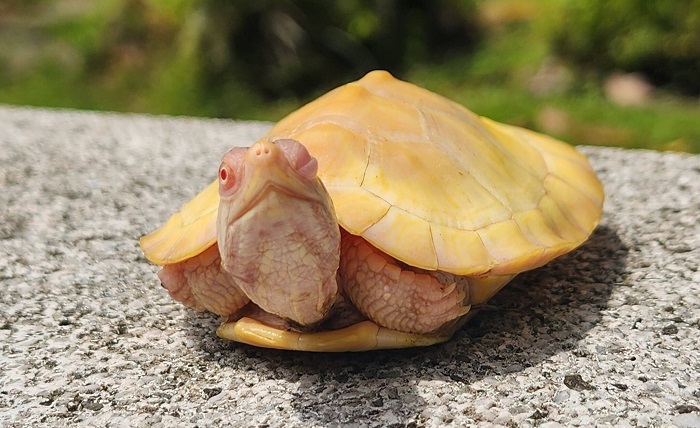
An albino turtle is a rare reptile that is born with albinism, a genetic condition that prevents the production of melanin, the pigment responsible for normal coloration. Because of this condition, an albino turtle typically has a pale white or yellowish shell, pinkish or red eyes, and a very distinct appearance compared to normal turtles. The albino turtle is considered extremely rare in the wild because albinism often makes survival more difficult due to lack of camouflage and sensitivity to sunlight.
An albino turtle occurs when both parents carry recessive genes responsible for albinism. This means that even if the parents look normal, they can still produce an albino turtle if the genetic combination matches. In the animal kingdom, albinism is uncommon, but when it occurs in reptiles like turtles, it creates a fascinating and visually striking creature that attracts attention from scientists, hobbyists, and pet lovers.
The albino turtle is often misunderstood as a separate species, but it is actually a genetic variation found in different turtle species. For example, snapping turtles, red-eared sliders, and softshell turtles can all potentially produce albino individuals. However, the albino turtle is more fragile compared to its normally pigmented counterparts due to its sensitivity to light and environmental stress.
Physical Characteristics of Albino Turtle
The albino turtle is easily recognizable because of its unique physical traits. Unlike normal turtles that have dark green, brown, or patterned shells, an albino turtle has a pale yellow, cream, or even white shell. This lack of pigmentation makes the albino turtle stand out dramatically in any environment, whether in water or on land.
One of the most striking features of an albino turtle is its eyes. Instead of dark-colored eyes, the albino turtle usually has red, pink, or light orange eyes due to visible blood vessels beneath the surface. This eye coloration is a direct result of albinism and is one of the key identifiers used to distinguish an albino turtle from other light-colored turtle variations.
Another important characteristic of the albino turtle is its sensitivity to sunlight. Because it lacks melanin, the albino turtle is more vulnerable to UV radiation and can suffer from sunburn or eye damage if exposed for too long. This makes its survival in the wild more challenging and is one of the reasons why albino turtles are often found in controlled environments or captivity.
Habitat and Natural Environment of Albino Turtle
The natural habitat of an albino turtle depends on the species it originates from, but generally, these turtles are found in freshwater environments such as rivers, ponds, lakes, and marshes. However, the albino turtle is rarely seen in the wild due to its lack of camouflage, which makes it an easy target for predators.
In captivity, the albino turtle requires a carefully controlled habitat to thrive. This includes clean water, proper filtration systems, and shaded areas to protect it from excessive sunlight. The albino turtle also benefits from a temperature-controlled environment because extreme heat or cold can stress its sensitive system.
An albino turtle in the wild would normally struggle to survive because its bright coloration makes it highly visible to predators such as birds, fish, and larger reptiles. This is why most albino turtles seen today are either bred in captivity or kept as exotic pets. Their natural environment must be carefully replicated to ensure their health and longevity.
Diet and Feeding Habits of Albino Turtle
The albino turtle has a diet that is similar to other turtles of its species. Most albino turtles are omnivores, meaning they eat both plant and animal matter. Their diet can include aquatic plants, insects, worms, small fish, and commercial turtle pellets designed for balanced nutrition.
A healthy albino turtle requires a diet rich in calcium and vitamins to support shell development and overall growth. In captivity, owners often supplement the albino turtle’s diet with calcium blocks and vitamin-enriched foods to prevent deficiencies. Without proper nutrition, the albino turtle can develop shell deformities or weakened immunity.
Feeding habits of an albino turtle are usually influenced by its environment and age. Younger albino turtles tend to eat more protein for growth, while adult albino turtles consume more plant-based foods. In all cases, clean water is essential because the albino turtle often eats and defecates in the same environment, making water quality a critical factor for its health.
Behavior and Lifespan of Albino Turtle
The behavior of an albino turtle is generally calm and slow-moving, similar to other turtles. However, due to its sensitivity, an albino turtle may be slightly more cautious in its movements and less likely to expose itself in open areas for long periods.
An albino turtle can live for several decades if properly cared for, especially in captivity where threats are minimized. Depending on the species, the lifespan of an albino turtle can range from 20 to 50 years or even more. Proper diet, clean water, and a stress-free environment play a major role in extending the life of an albino turtle.
Social behavior in an albino turtle is not very complex, as turtles are generally solitary creatures. However, they can recognize feeding routines and may respond to their owners over time in captivity. The albino turtle’s behavior is also influenced by its environment, as stress or poor conditions can lead to lethargy or health problems.
Care Guide for Pet Albino Turtle
Taking care of an albino turtle requires special attention compared to regular turtles. Because of its sensitivity to light and environmental changes, the albino turtle needs a carefully designed habitat that mimics its natural ecosystem while providing protection from harmful conditions.
A proper tank setup for an albino turtle should include both water and dry basking areas. The water must be filtered and regularly cleaned to prevent infections. UV lighting should be used carefully, as excessive exposure can harm the albino turtle’s eyes and skin. A balanced lighting schedule is essential for maintaining its health.
Feeding a albino turtle in captivity must be consistent and nutritious. Owners should provide a mix of commercial turtle food, fresh vegetables, and protein sources. Additionally, calcium supplements are important to support the shell strength of the albino turtle. Regular monitoring of health and behavior helps ensure the turtle remains healthy and active.
Conservation
The albino turtle is not a separate species but a genetic variation, so its conservation status depends on the species it belongs to. However, albino turtles are rare in the wild because their condition reduces their survival chances. As a result, most albino turtles exist in captivity or are bred by enthusiasts.
There are many myths surrounding the albino turtle, including beliefs that it brings good luck or possesses special powers. While these myths are culturally interesting, they are not scientifically supported. The albino turtle is simply a natural genetic variation and should be appreciated for its biological uniqueness rather than superstition.
Conservation efforts for turtles in general indirectly support the survival of the albino turtle. Protecting natural habitats, reducing pollution, and preventing illegal wildlife trade all contribute to healthier turtle populations, including those that may carry albino genes.
Conclusion
The albino turtle is one of the most fascinating and visually unique reptiles in the animal world. Its rare coloration, genetic background, and special care requirements make it a subject of interest for both scientists and pet enthusiasts. Although the albino turtle faces challenges in the wild, proper care in captivity allows it to live a long and healthy life. Understanding the albino turtle helps promote awareness about genetics, conservation, and responsible pet ownership.
FAQs
1. What causes an albino turtle?
An albino turtle is caused by a genetic mutation that prevents melanin production, resulting in its pale appearance.
2. Can an albino turtle survive in the wild?
An albino turtle rarely survives in the wild due to its lack of camouflage and sensitivity to sunlight.
3. What does an albino turtle eat?
An albino turtle eats plants, insects, small fish, and specially formulated turtle food.
4. How long does an albino turtle live?
An albino turtle can live 20–50 years or more with proper care in captivity.
5. Is an albino turtle a different species?
No, an albino turtle is not a separate species; it is a genetic variation of normal turtle species.